
Labour is the single biggest cost in running a restaurant - typically 30 to 35% of revenue. It's also one of the hardest to reduce without damaging the experience that brings customers back. AI ordering offers a third path: automate the transactional parts of service, and free your team to do what technology cannot.
This isn't a vision of a waiter-free restaurant. It's a practical look at where AI is already making a measurable difference, and how operators are deploying those savings.
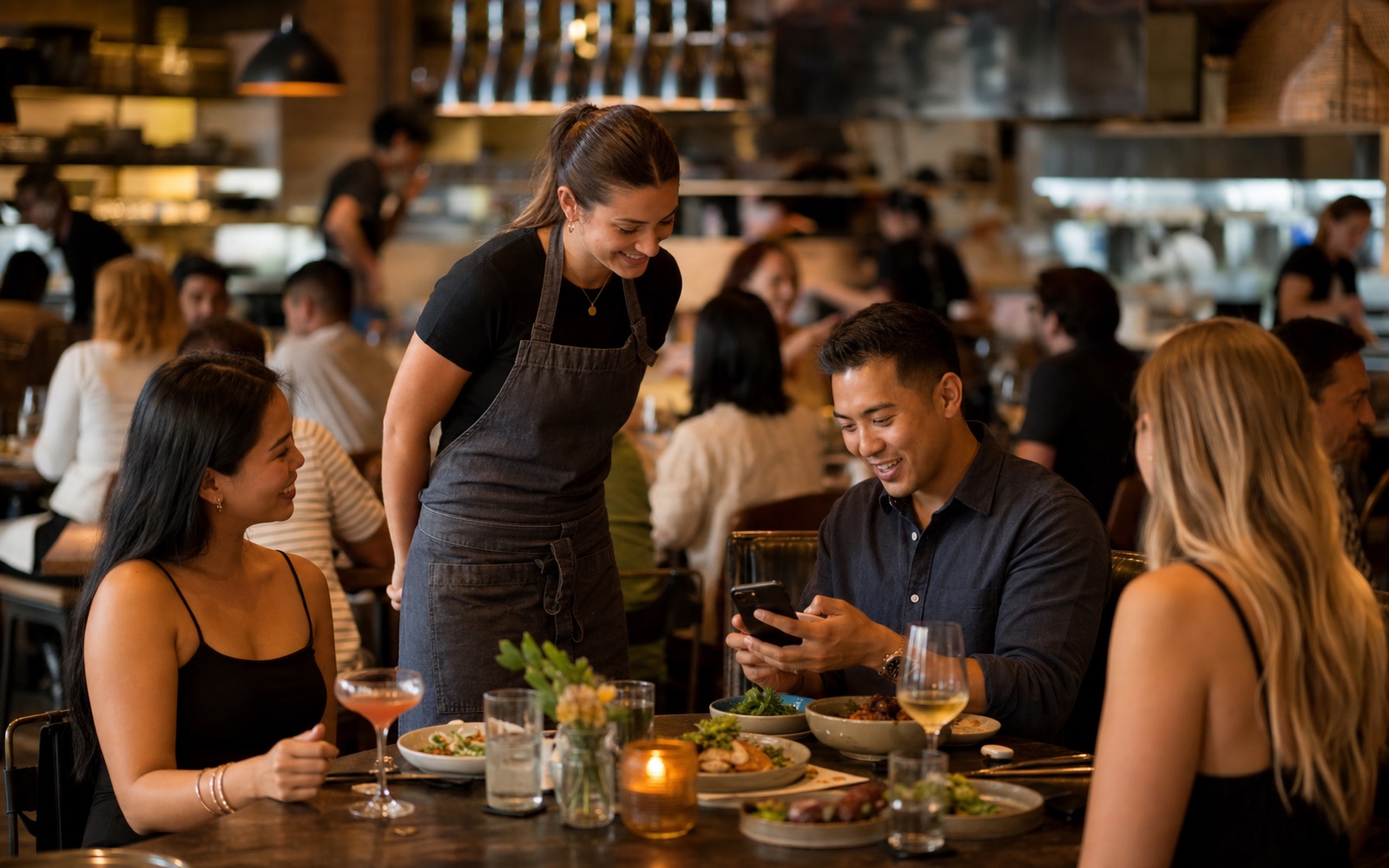
Where labour costs are actually going
In a full-service restaurant with 40 covers, a server spends roughly 35 to 40% of their time on order-taking and relay tasks: answering the phone, walking to the table, transcribing the order, confirming specials, walking back to enter it into the POS. That's the repetitive work AI handles entirely - answering the line in one ring and taking the order 24/7, with QR ordering at the table as an add-on.
The remaining 60 to 65% - welcoming guests, handling complaints, reading the room, making recommendations from genuine knowledge of the menu - is where skilled staff earn their wage. AI doesn't compete there.
The case for redeployment, not redundancy
The restaurants seeing the best results from AI ordering aren't cutting headcount - they're restructuring roles. Common redeployment patterns:
- Fewer order-takers, more floor presence. One server can comfortably cover more tables when they're not taking orders. That server instead roams the floor, checks in on experience, and handles escalations.
- Junior staff at higher value tasks. Entry-level staff who previously spent shifts reciting the menu are freed to learn wine pairing, upselling techniques, and genuine hospitality skills.
- Consistent cover during peak hours. AI ordering doesn't slow down during a Saturday dinner rush. Human teams don't need to be over-staffed as a hedge against order-taking bottlenecks.
One operator's experience: "We went from needing 5 servers on a Friday night to 3 - but the 3 we kept were far more engaged with guests. Tips went up, not down."
The upsell multiplier
AI ordering doesn't just reduce cost - it increases revenue. A human server, under pressure during a busy service, will often skip the upsell. Voitly's AI never does. It naturally suggests a wine pairing, a side that complements the main, or a dessert when the mains are cleared.
Voitly restaurants see an average £4.20 increase in spend per table from AI-driven suggestions. On 80 covers a night, that's £336 in additional daily revenue - roughly £120,000 per year. Against an annual plan cost of under £1,200, the return is over 100x.
What AI ordering cannot replace
It's worth being honest about the limits. AI ordering is poor at:
- Reading physical cues - a customer who seems disappointed with their dish but hasn't complained
- Recovering a negative experience with genuine warmth and human judgement
- Building the kind of repeat-visit relationship that comes from being remembered by name
- Handling highly unusual requests that fall outside the menu's described options
The best restaurants treat AI as infrastructure for the predictable parts of service - the order relay - and invest their people in the irreplaceable parts. That's not a compromise. It's a better allocation of your most expensive and most valuable resource.
Getting started: what to expect in the first month
- Week 1: Setup and staff training. Most resistance comes from front-of-house staff who worry about job security. Address this directly in your team briefing.
- Week 2: Soft launch. Let AI phone ordering answer the line and take orders 24/7, with QR ordering at the table as an add-on, alongside staff-taken orders. Let customers choose. Track adoption rate.
- Week 3 to 4: Measure. Compare average order value, table turn time, and error rate against the previous month. Adjust staffing based on real data, not assumptions.
See the difference in your restaurant
Start a free 7-day trial. No credit card required. Setup in under 10 minutes.
Try Voitly free